

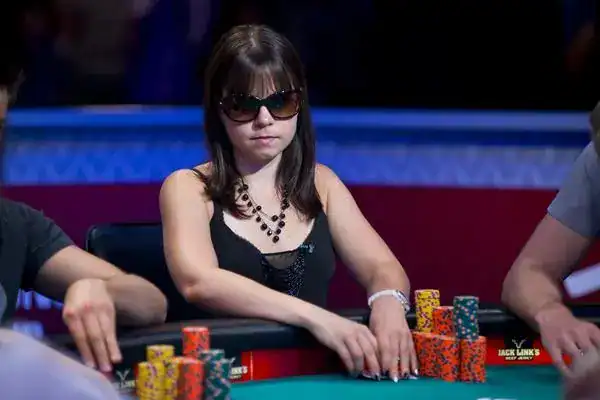
Annette Obrestad Returns to WSOP Europe With No Playbook and Nothing to Lose
Nearly two decades ago, a teenage girl from Norway walked into a London casino and won the first WSOP bracelet ever awarded outside of Las Vegas.
She was 18. She hadn’t planned on being famous.
On March 31, Annette Obrestad will make her return to the series she helped launch — heading to Prague for WSOP Europe 2026 after eight years away from competitive poker.
A Record Built in Another Era
Obrestad was 18 years old when she won the 2007 WSOPE Main Event in London, taking down a $2 million first-place prize and becoming the youngest player ever to claim a WSOP bracelet.
She still holds the record. The summer WSOP in Las Vegas requires players to be 21, so no American-based event will ever produce a younger champion. Europe is a different story — but nearly two decades on, nobody has come close.
Eight Years, a Different Life
After her 2007 breakthrough, Obrestad spent years as one of poker’s most recognizable young stars — sponsored travel, major TV productions, the full circuit. But by 2018, she was done.
She has spoken openly about the personal struggles that led her to step away, describing a period where her mind simply wasn’t at the table anymore.
But Las Vegas remained her home, and competitive Scrabble scratched that tournament itch for her, playing twice a week and building a genuine community. Obrestad even started a YouTube channel covering makeup tutorials and built a following of nearly 50,000 subscribers.
Then her ten-year marriage ended, and after taking a couple of years to reassess her next steps, she decided it was time to return to poker.
Back at the Table — This Time On Her Own Terms
In January, Obrestad quietly slipped into a $150 Monster Stack at The Orleans in Las Vegas and finished sixth. There were no major announcements, no fanfare, just a player finding her feet again.
The WSOP noticed. They reached out with an invitation to Prague and made clear that there were no strings attached.
There was one added honor she hadn’t anticipated. Obrestad has been asked to deliver the ceremonial “shuffle up and deal” to kick off the Main Event — a role typically reserved for the game’s most celebrated figures.
In Prague, she plans to play the Ladies Event, the Main Event, and the $1,100 Double Board Bomb Pot PLO.
No Solver, No Problem?
Obrestad has been away for eight years. She has said herself that she doesn’t know today’s top players, having only recently started watching streams, and has no intention of hitting the books before Prague.
The game she’s walking back into barely resembles the one she left.
Solver culture has reshaped tournament poker from the ground up. Today’s field — even at the recreational level — arrives with range charts, preflop frequencies, and GTO baselines that simply didn’t exist in 2007. The gap between an informed amateur and a complete novice has never been wider.
Obrestad’s plan of attack is simple: she’s just going to ignore all of it.
“I just want to get in as many hands as possible,” she told WSOP.com. “I’ve never been a studier — even though I think about the game all the time. I feel like my game is still pretty good.”
It’s hard to tell whether this approach is refreshing or reckless. But it’s impossible to dismiss the fact that she built her entire reputation on doing exactly this: reading people, trusting her instincts, and outplaying fields that underestimated her.
She did it at 18, and Prague will show the world whether or not Obrestad’s approach to poker still means something at 36.
What Recreational Players Can Take From This
The modern poker landscape can feel like it belongs to a different species. Solvers, GTO wizards, players who’ve logged millions of hands online — for the recreational player who shows up twice a month, it’s easy to feel like the game has left you behind.
Obrestad’s return is a useful reminder that old-school poker skills still matter.
She won the biggest bracelet of her era on instinct, feel, and an almost supernatural ability to read a table. Those skills don’t come from software. They come from loving the game and paying attention.
This is not to suggest that recreational players skip the fundamentals, but there’s something worth holding onto in watching a former world champion walk back into one of poker’s biggest stages and trust herself to figure it out in real time.
The game rewards study, but it also rewards players who are present, fearless, and genuinely enjoying themselves.
And Obrestad has always been all three.
Image: Courtesy of WSOP.com