

Wyoming’s New Poker Law Closes the “Friendly Game” Loophole
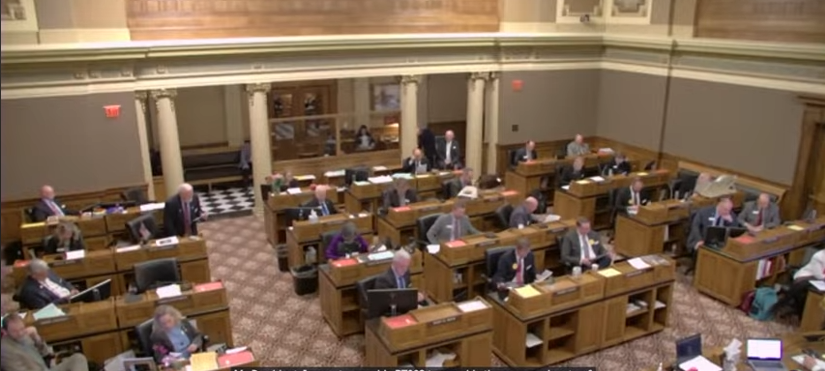
On March 5, 2026, Wyoming signed Senate File 44 into law, tightening the definition of what constitutes a legal “friendly” poker game for the first time in years.
The legislation addresses a gap in state law that allowed commercial poker operators to pass themselves off as private social gatherings. The new legislation takes effect July 1, 2026.
What Wyoming’s Old Poker Law Actually Said
Wyoming law broadly prohibits gambling, but carves out an exception for games played among genuine friends — provided participants share a “bona fide social relationship.”
The problem was that the law never defined what that relationship had to look like. Investigators found venues running high-stakes games with commercial rake, and when authorities asked questions, everyone claimed to be pals.
County prosecutors were reluctant to act because the social relationship between the defense was genuinely ambiguous.
In testimony before the Revenue Committee, Sen. John Kolb, R-Rock Springs, summed up the spirit of the new law plainly: “Frankly, you can’t be friends for the sole purpose of wanting to gamble.”
What Senate File 44 Changes
This new law defines a “bona fide social relationship” as a genuine connection between participants who have established knowledge of each other, and explicitly excludes any relationship that arose for the purpose of gambling.
Beyond that relationship, SF 44 sets out additional conditions a legal private game must meet:
- The game must not be advertised or open to public participation.
- Only “natural persons” may play — no commercial entities.
- No one — not the host, the venue, or any middleman — may receive any payment for facilitating the game. The only money that can change hands is winnings.
The bill passed the Wyoming House 58-0. Wyoming Gaming Commission executive director Nicholas Larramendy, who supported the legislation, said the social-game exception had been exploited across the state for commercial gain — precisely what the original law never intended to allow.
What This Means for Home Game Players
For most recreational players, nothing changes.
A Friday night game among genuine friends — where no one takes a cut, the game isn’t advertised, and the host isn’t profiting — falls comfortably within what the new law protects.
Sen. Kolb made that clear in a committee testimony, joking that under the new rules, players could still “play for bananas.” Good home game etiquette and safety have always pointed in this direction anyway: play with people you know, keep it private, and don’t let money flow anywhere except across the felt.
Where the law does introduce sharper scrutiny is at the edges. Games where a host receives tips, venues that quietly promote a weekly game to attract foot traffic, or any arrangement where someone other than the players walks away with money are the sort of games explicitly outside of the law.
Players who participate in games at bars or semi-public venues would be wise to understand how their specific setup holds up against the new language.
How Home Game Laws Work Across the US
Wyoming is not alone in using a social-relationship test to define legal home games, either. The same basic framework — genuine pre-existing relationship, no rake, no fee to the house — underpins private game laws in a number of states, including Colorado, Connecticut, and Texas.
What varies widely is how clearly that framework is written into statute. In many jurisdictions, “bona fide social relationship” or its equivalent appears in the law without any further definition, leaving the phrase open to interpretation.
The broader picture is something players across the country navigate regularly. So it’s important to do your homework on where things stand in your home state, whether it’s a simple home game or playing poker online.
Wyoming’s SF 44 is notable because it does the definitional work that many state laws have left undone. By specifying that the relationship must predate the gambling context and explicitly excluding tip-based compensation and advertising, it gives players and regulators a workable standard, rather than just a phrase that requires litigation to interpret.
What Wyoming’s Move Signals for Poker Regulation
SF 44 is part of a broader legislative package that emerged from Wyoming’s interim gaming task force, convened to address rapid growth in the state’s gambling landscape.
A companion bill, SF 46, restricts skill-based gaming machines to licensed liquor establishments, a move aimed at keeping those games away from grocery stores and other family-accessible spaces.
Together, the bills reflect a wider recognition that gambling statutes written years ago are struggling to keep pace with how games are actually being played and operated today.
As the popularity of poker continues to grow at the recreational and semi-professional level, the legal definition of a “friendly game” is likely to come under review in other states. Wyoming’s approach of providing precise definitions and clear compensation rules offers a workable model for legislators looking to modernize their own statutes.
For Wyoming players, the immediate next step is July 1, 2026, when the law goes into effect. Anyone hosting or regularly participating in private games has time between now and then to make sure their arrangements are clearly on the right side of the new standards.
Image: Senate Floor Stream, March 6 2026 / Youtube