

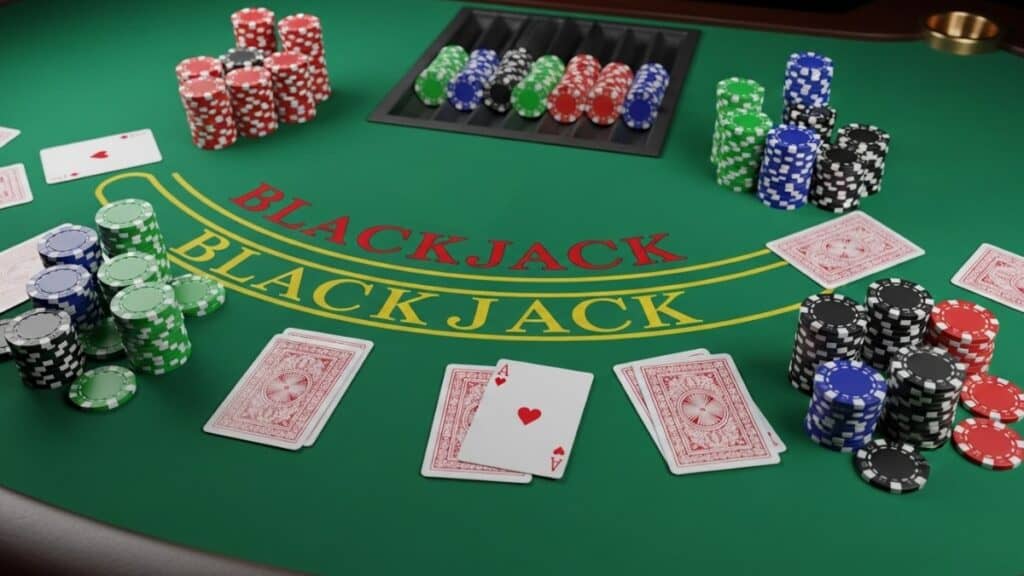
Blackjack Hands – Best and Worst Explained
Every blackjack round comes down to the cards in front of you and the total they form. US casinos shift how those totals perform through rules such as 3:2 or 6:5 payouts on a natural 21 and whether the dealer must hit soft 17.
Some hands carry an edge, others hang in the middle, and many sit in a zone where small decisions tilt results over long sessions.
Blackjack Hands: Overview
When players talk about blackjack hands, they mean totals. Number cards count at face value, picture cards count as 10, and aces move between 1 and 11, so a hand can step closer to 21 without going over. A two-card 21 with an ace and a ten-value card stands at the top, strong standing totals such as 19 or 20 follow, and “stiff” totals like 15 or 16 sit near the bottom.
Blackjack platforms then apply rules over those totals. In a common six-deck US shoe with dealer standing on soft 17, double after split allowed, and 3:2 payout on a natural, the long-run house edge sits well under 1 percent. Under similar rules with a 6:5 payout on a natural, that edge moves noticeably higher because the premium hand pays less.
Dealer rules push the numbers further. Tables where the dealer hits soft 17 usually add around 0.2 percentage points to the edge compared with games where the dealer must stand. Strong totals still win more often than weak ones, yet these rule tweaks shift their long-term performance in measurable ways.
Hard Hand vs Soft Hand Blackjack: Aces and Flexibility
The ace controls how much safety a hand has. When an ace still counts as 11 without busting, the hand behaves very differently from a total with no such cushion.
- Soft hand: Any hand where an ace counts as 11, such as A-7 or A-3-5. If the next card would push the total over 21, the ace can drop to 1, and the hand survives.
- Hard hand: Any hand with no ace counted as 11, like 10-8 or 9-7. Once a hand is hard, every extra card drives the total straight toward a bust.
- Soft total examples: A-7 (soft 18) can absorb many hits. Against weak dealer upcards such as 4, 5, or 6 in standard six-deck games, basic strategy charts often call for an aggressive hit or double because the ace can still convert to 1.
- Hard total examples: 10-8 (hard 18) or 9-7 (hard 16) have a fixed value. A ten-value card on a hit busts immediately, so these totals usually stand against most dealer cards, with only a few matchups where a hit or surrender appears.
- Frequency and impact: In standard multi-deck shoes, combinatorial counts put the chance that a two-card starting hand contains at least one ace at just under 15 percent. Knowing when that ace still counts as 11 or has already dropped to 1 shapes a large share of decision points.
What Is the Best Hand in Blackjack?
The best hand in blackjack is the natural 21, an ace and a ten-value card on the first two cards. In a traditional 3:2 game, a $10 stake pays $15 in winnings for that result, while a 6:5 table pays only $12. That 20 percent cut on a premium hand shows up clearly once the same situation repeats over many shoes.
Natural 21 does not appear very often. In single-deck games, 64 of the 1,326 possible two-card combinations form a natural, which is about 4.8 percent of starting hands; in common multi-deck shoes, the rate sits near 4.75 percent, roughly once every 20 or 21 rounds.
Rule packages sit on top of that base rate. Under very favorable single-deck rules with 3:2 payouts—the ideal when playing on blackjack sites—theoretical house edge estimates drop toward about 0.15 percent with perfect play.
New Jersey regulators spell this out in N.J. Admin. Code § 13:69F-2.7, current through Register Vol. 57, No. 12 (June 16, 2025), which requires a 3:2 payout when the dealer does not also have blackjack and treats a player blackjack against a dealer blackjack as a stand-off instead of a loss.
Best Blackjack Hands Beyond a Natural 21
Once a natural is out of the picture, the best blackjack hands usually means totals and matchups with strong expected value. These rankings follow standard basic-strategy analysis for a six-deck game with dealer standing on soft 17, double after split allowed, and 3:2 payouts.
| Hand type | Example total | Hand classification | Typical basic-strategy move | Performance vs standing only | Notes |
|---|---|---|---|---|---|
| Natural blackjack | A-10 | Two-card 21 | Stand, auto-resolve | Strongest positive EV in the game | 3:2 payout lifts return on this rare premium hand |
| Strong total vs weak dealer card | 10-10 vs 6 | Hard 20 | Stand | Wins a large share of outcomes | Dealer often breaks trying to reach at least 17 |
| Soft 20 vs weak dealer card | A-9 vs 6 | Soft total | Stand on most charts | Performs close to hard 20 in basic-strategy math | Extra safety if a small card hits early |
| Classic double-down opportunity | 11 vs 6 | Hard total | Double | Among the highest-return doubles in standard charts | Extra stake rides when dealer 6 breaks at a high rate |
| Pair split in a strong matchup | 8-8 vs 6 | Pair (stiff start) | Split | Higher EV than standing on hard 16 | Two hands compete against a vulnerable dealer instead of one |
Performance vs standing only describes how these plays rank against simply standing in the same spot under a typical six-deck blackjack ruleset with dealer standing on soft 17, double after split allowed, and 3:2 payouts.
Winning Hands in Blackjack for the Long Term
Some winning hands in blackjack look uncomfortable when they appear. The total may be stiff, or the recommended move may seem too aggressive, yet basic strategy treats these plays as the least costly choices once outcomes are tracked over thousands of rounds on gambling sites.
- Hitting hard 12 against dealer 2 or 3
Many players freeze on 12 because any ten-value card busts the hand. Strategy tables often still call for a hit in these matchups, since standing leaves the total behind too many dealer outcomes. - Hitting hard 16 against dealer 10 when surrender is off the felt
Both hit and stand lose money here. Expected-value calculations show that hitting a 16 in this matchup usually shaves a small slice off the loss, even though the hand busts frequently; standing simply loses more often when the dealer starts from a 10. - Splitting 9-9 against dealer 9 under common multi-deck rules
Standing on 18 seems safe. In some rule sets, splitting 9s against 9 produces a slight improvement, because two hands compete for the pot and some dealer finishes end as pushes instead of clean losses. - Doubling soft 18 against dealer 6
Soft 18 looks comfortable as a standing total, yet doubling against a weak 6 in many modern charts gives a better long-run result. The ace protects against some bad hits, and dealer 6 carries a high break rate. - Hitting soft 18 against dealer 9 or 10
Standing on 18 against strong dealer cards often leaves the player behind. One extra card, even with the risk of landing on 17, tends to lose slightly less over large samples than locking in a vulnerable soft 18.
What Are the Worst Hands in Blackjack?
Talk of the worst hand in blackjack usually centers on stiff totals. Totals from 12 to 16 do not bust yet sit in a range where a hit often ruins the hand, and standing leaves the player chasing dealer outcomes that reach 17 or higher. The bust probabilities on these totals show why they drop in value so quickly.
- Hard 12: A hard 12 busts on any ten-value card, four ranks out of 13, so the bust rate on the next hit sits close to 31 percent. Standing still often loses against dealer 7 through ace.
- Hard 13: Hitting hard 13 busts on 9, 10, J, Q, or K, five ranks out of 13, near 39 percent. Many upcards still push charts toward a hit, since standing gives up too much win share.
- Hard 14: From 14, any 8 or higher busts the hand, six ranks out of 13, around 46 percent. The total often looks stuck in place, yet basic strategy still leans on a hit against strong dealer cards.
- Hard 15: With 15, any 7 or higher breaks the hand, seven ranks out of 13, roughly 54 percent. This total pops up often and drives many tough basic-strategy decisions in real play.
- Hard 16: Hard 16 busts on 6 or higher, eight ranks out of 13, around 62 percent. Bust-probability charts single it out as one of the nastiest common starting totals, especially against dealer 9, 10, or ace. When surrender is unavailable, both choices lose in the long run, with hitting usually losing slightly less.
Reading Blackjack Hands Without Chasing Every Outcome
Strong play treats blackjack hands as repeatable patterns rather than isolated swings. Each total, from a soft 18 to a hard 16, fits into a structure shaped by basic strategy, the dealer upcard, and the specific house rules at that table.
House rules deserve close study before the first bet, since payout on natural 21, surrender options, and whether the dealer hits soft 17 all change how certain hands perform.
Strategy charts built for current 3:2 and 6:5 shoes in US venues give a solid reference when decisions speed up, and chips move quickly.
Gambling should stay controlled and optional; if play starts to cause stress or becomes hard to stop, contact 1-800-GAMBLER for confidential support in the United States.